Planning a healthcare app? Learn about healthcare mobile app development, key features, compliance, costs, and why custom apps are transforming healthcare.
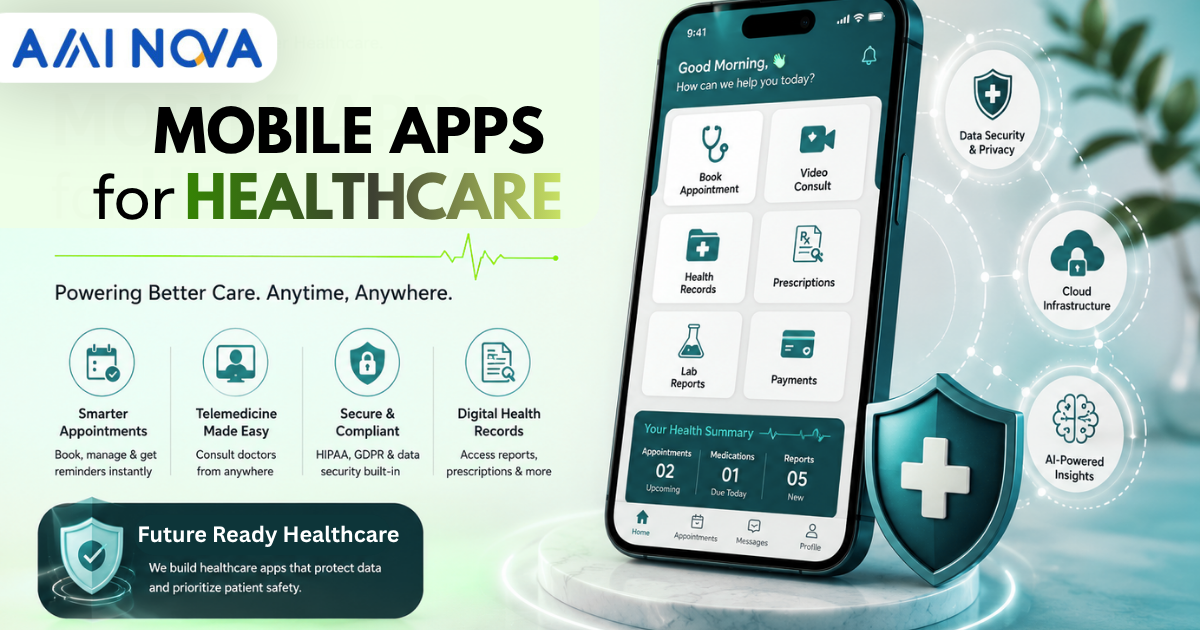

The healthcare industry is undergoing one of the largest digital transformations in history. In present, Patients no longer want to wait in long queues for consultation. Instead, they expect healthcare services to be as easy & convenient as ordering food or booking a cab.
The demand for healthcare mobile app development is rapidly increasing. As hospitals, clinics, diagnostic labs, telemedicine providers continue to invest in digital technologies to improve healthcare accessibility.
According to Grand View Research, the global mobile health (mHealth) market was valued at USD 80.87 billion in 2023 and is projected to grow at a CAGR of over 14% through 2030, driven by increasing smartphone adoption & demand for remote healthcare solutions.
In this guide, we'll explore the key features, conformance, and development costs of healthcare mobile applications.
Why Healthcare Organizations Are Investing in Mobile Apps
Healthcare providers face challenges, which includes patient expectations, rising operational costs & insufficient staff.
Mobile applications help solve these problems by empowering:
Scheduling online appointment
Virtual doctor consultations
Electronic medical records (EMR) access
Digital prescriptions
Protects patient communication
Health monitoring through smart wearable devices
Medication reminders
Essential Features Every Healthcare Mobile App Should Include
Successful healthcare mobile app development starts by understanding user’s insight. While features vary depending on the type of healthcare approach, these are considered crucial.
1. Safe & Secure User Registration
Patients should be able to register securely using mobile numbers, email address, or social logins while maintaining strong authentication. Healthcare apps should also endorse job-centric access for patients, doctors, administrators, pharmacists, and laboratory staff.
2. Appointment Booking
An user-friendly appointment scheduling system allows patients to:
Search doctors
View available time slots
Instant appointment bookings
Receive reminders
Reschedule visits
This reduces missed appointments and improves resource utilization.
3. Smart Telemedicine and Video Consultation
Virtual consultations have become an essential feature of modern healthcare. High-quality video calling combined with secure messaging enables doctors to consult patients remotely.
4. Electronic Health Records (EHR)
At present, patients expect instant access to:
Medical history
Test reports
Prescriptions
Vaccination records
Lab reports
With the help of Centralized records, healthcare providers make faster and better-informed clinical decisions.
5. Digital Payments
Integrated payment gateways optimize consultation fees, lab payments, insurance claims, and subscription plans. Patients gain benefits from cashless transactions, while providers experience fast payment processing.
6. Push Notifications
Healthcare apps should automate reminders for:
Upcoming appointments
Medication schedules
Vaccination alerts
Lab test updates
Health campaigns
7. AI-Powered Features
Artificial Intelligence is transforming healthcare applications through:
AI symptom checkers
Smart appointment recommendations
Medical image assistance
Predictive analytics
Automated patient support
Organizations investing in AI-powered healthcare solutions can boost efficiency while delivering more personalized patient experiences.
Compliance: The Most Critical Part of Healthcare Mobile App Development
Rather than relying on traditional business apps, healthcare applications handle extremely sensitive personal information, which makes compliance a non-negotiable requirement.
Depending on your target market, healthcare apps may need to comply with:
HIPAA (United States)
GDPR (European Union)
NABH digital guidelines (India)
Local healthcare data protection regulations
Failure to comply can result in legal penalties, financial losses, and reputational damage.
A secure healthcare application should include:
End-to-end encryption
Multi-factor authentication
Secure cloud infrastructure
Data backup and recovery
Audit logs
Role-based permissions
Healthcare organizations should also assure that every third-party integration, including payment gateways & cloud platforms, meets the required compliance standards.
What Does Healthcare Mobile App Development Cost?
One of the most common questions businesses ask is: "How much does a healthcare app cost?"
The answer depends on project complexity, integrations, compliance requirements, and feature set.
Here's a general estimate:
Application Type | Estimated Development Cost |
Basic healthcare app | 3 - 6.2 lakh |
Medium-complexity app | 5-15 lakh |
Enterprise healthcare platform | 15-25 lakh |
Factors affecting cost include:
UI/UX design
Android and iOS development
Security implementation
AI integration
Third-party APIs
Compliance certification
While the initial investment may seem significant, a well-built healthcare application can reduce operational costs, improve patient loyalty, and create sustainable business growth.
Common Challenges During Healthcare App Development
Healthcare software projects require more complexity than standard mobile applications. Some common challenges include:
Data Security: Securing confidential patient information from unauthorized access.
System Integration: Combining with hospital information systems, EHR platforms, pharmacies, insurance providers, and laboratories.
Regulatory Compliance: Conforming with healthcare regulations across different regions.
Scalability: Supporting thousands of active users without affecting performance.
User Experience: Designing interfaces that are accessible for patients of all ages and digital literacy.
How AaiNova Builds Secure Healthcare Solutions
Technical architecture, cloud infrastructure, security, API integrations, and scalability all play a significant role. If you're planning a mobile application from scratch, our guide Mobile Application Development: CTO's Pointer-by-Pointer Checklist explains the technical decisions that impact both project success and long-term costs.
At AaiNova, we specialize in developing high-performing, trusted, and user-centric digital solutions tailored to healthcare organizations. By combining modern technologies, intuitive UX, and strong security practices, we help healthcare providers deliver the best patient experiences while supporting future-ready digital growth.
Our healthcare expertise includes:
Patient mobile applications
Doctor booking platforms
Telemedicine solutions
AI-powered healthcare platforms
Custom enterprise healthcare software
Explore how AaiNova developed a Healthcare App Development & Doctor Booking Platform which includes appointment scheduling, multi-language support, lab data integration, and secure patient-doctor communication.
Conclusion
The future of healthcare is digital, connected, and patient-centric. Organizations that invest in healthcare mobile app development today are positioning themselves to enhance accessibility, streamline operations, and deliver better care.
Whether you're planning a telemedicine platform, hospital management solution, diagnostic app, or wellness application, working with an experienced development team can help you bring your vision to reality through innovative technology.
At AaiNova, we build intelligent healthcare applications that are secure, safe, growth-oriented, and designed to support the evolving needs of modern healthcare providers, helping organizations innovate while keeping patient trust at the centre of every solution.
Get in touch with our experts today to turn your vision into reality.


 by Dilshad Shaikh